Business representatives state that with the advantage of an extensive coastline combined with abundant solar and wind resources, Vietnam has the potential to become a green hydrogen production hub in Asia.
According to the Vietnam Hydrogen Energy Development Strategy approved by Prime Minister Pham Minh Chinh in early February, this energy ecosystem is developed on the basis of renewable power, encompassing production, storage, transportation, distribution, domestic utilization, and export. Green hydrogen is considered the "key" to enabling Vietnam to achieve net-zero emissions by 2050.
At the conference implementing this strategy on February 22, Ms. Huynh Thi Kim Quyen, General Director of The Green Solutions Group—the developer investing in Vietnam's first green hydrogen plant project—assessed that renewable energy (solar, wind) combined with a long coastline represent significant national advantages in hydrogen production.
"Vietnam holds substantial potential for production and has every right to envision becoming a green hydrogen manufacturing hub in Asia," she stated.
Additionally, producing this type of fuel also generates revenue from the sale of carbon credits. For instance, with the Ben Tre Green Hydrogen Production Plant having a capacity of 24,000 metric tons of hydrogen per year, estimated revenues from carbon credit sales could reach up to USD 37 million annually, equivalent to USD 1 billion over the plant's entire lifecycle. "These proceeds will help offset the high initial capital expenditures," she remarked.
Nevertheless, the CEO of The Green Solutions noted that the primary challenges in hydrogen production remain high production costs and heavy capital requirements. Therefore, to secure resources for Vietnam's first green hydrogen project with an investment capital of USD 1.5 billion, the enterprise must access green financing loans from international financial institutions and banks.

Huynh Thi Kim Quyen, General Director of The Green Solutions Group, speaking at the conference on the implementation of the Hydrogen Energy Strategy on February 22.
Currently, the production cost of green hydrogen ranges from USD 2.5 to 6 per kilogram, compared to USD 1 to 2 per kilogram for conventional hydrogen. This cost disparity also poses challenges to the transition of the power sector.
According to the Power Development Plan VIII (PDP8), coal-fired thermal power plants must gradually transition to green, sustainable fuel sources. By 2050, these plants will cease utilizing fossil fuels (coal) for power generation, shifting entirely to biomass and ammonia.
Mr. Ngo Son Hai, Vice President of Vietnam Electricity (EVN), stated that the group is formulating an energy transition roadmap and solutions. Under this plan, EVN-owned coal-fired power plants will transition to utilizing hydrogen-blended fuels. However, due to high fuel costs, the EVN representative recommended that the Government introduce support mechanisms for hydrogen-fired power generation projects to ensure competitiveness against lower-cost power sources.
Furthermore, as this is an emerging sector undergoing pilot research and development, businesses and local authorities have petitioned regulatory agencies to formulate appropriate systems of standards and technical regulations, resolving legal and regulatory bottlenecks.
Mr. Vu Hong Duong, Deputy Director of the Tra Vinh Department of Industry and Trade, mentioned Green Solutions' hydrogen production plant project in the province. He noted that although the province has granted in-principle investment approval and allocated cleared land to the investor, progress remains stalled due to delays in numerous statutory and administrative procedures.
For instance, the project requires an input power capacity of 600 MW from wind and solar energy. In 2023, the investor requested regulatory approval for a "self-production and self-consumption" power mechanism, pledging not to interconnect to the national grid; however, policies governing this operational model have not yet been promulgated.
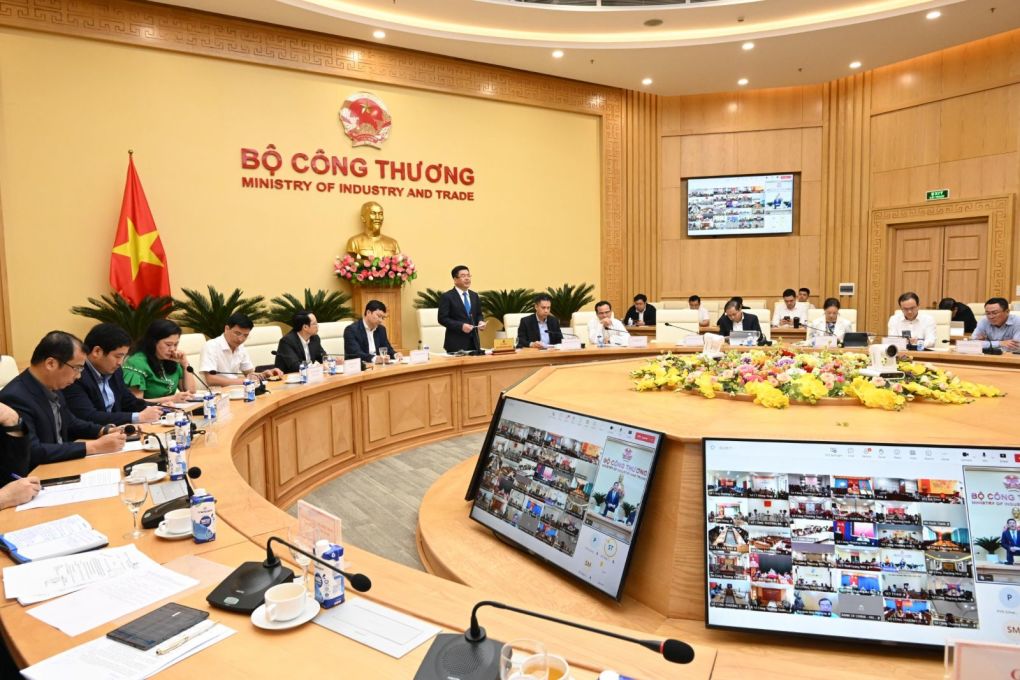
Minister of Industry and Trade Nguyen Hong Dien presiding over the conference implementing the hydrogen energy strategy on February 22.
Similarly, several hydrogen production projects cannot be implemented due to the lack of guiding regulations. Consequently, local authorities and enterprises emphasize that the target of producing 100,000 to 500,000 metric tons of hydrogen by 2030 will be difficult to achieve unless regulatory guidelines are promulgated promptly.
Mr. Nguyen Van Niem, Deputy Director of the Ben Tre Department of Industry and Trade, recommended piloting several moderate-scale projects in high-potential areas while awaiting the completion of the legal and regulatory framework.
On the regulatory front, Minister of Industry and Trade Nguyen Hong Dien stated that the ministry will advise on drafting and submitting an implementation plan to competent authorities for promulgation, in order to realize the targets and solutions for hydrogen development in Vietnam.
He emphasized the role of international organizations in sharing expertise, transferring technology, and training human resources for this emerging energy sector. Such cooperation will help Vietnam access advanced technology, develop its workforce, and foster joint manufacturing to bring hydrogen production costs down to viable levels.
The leadership of the Ministry of Industry and Trade directed affiliated units and relevant ministries to amend and issue regulations aligned with the new development landscape. Regarding bottlenecks facing hydrogen projects, Minister Dien assigned relevant departments and agencies to monitor them and advise ministry leadership or petition competent authorities for resolution.
Source: VNEXPRESS