
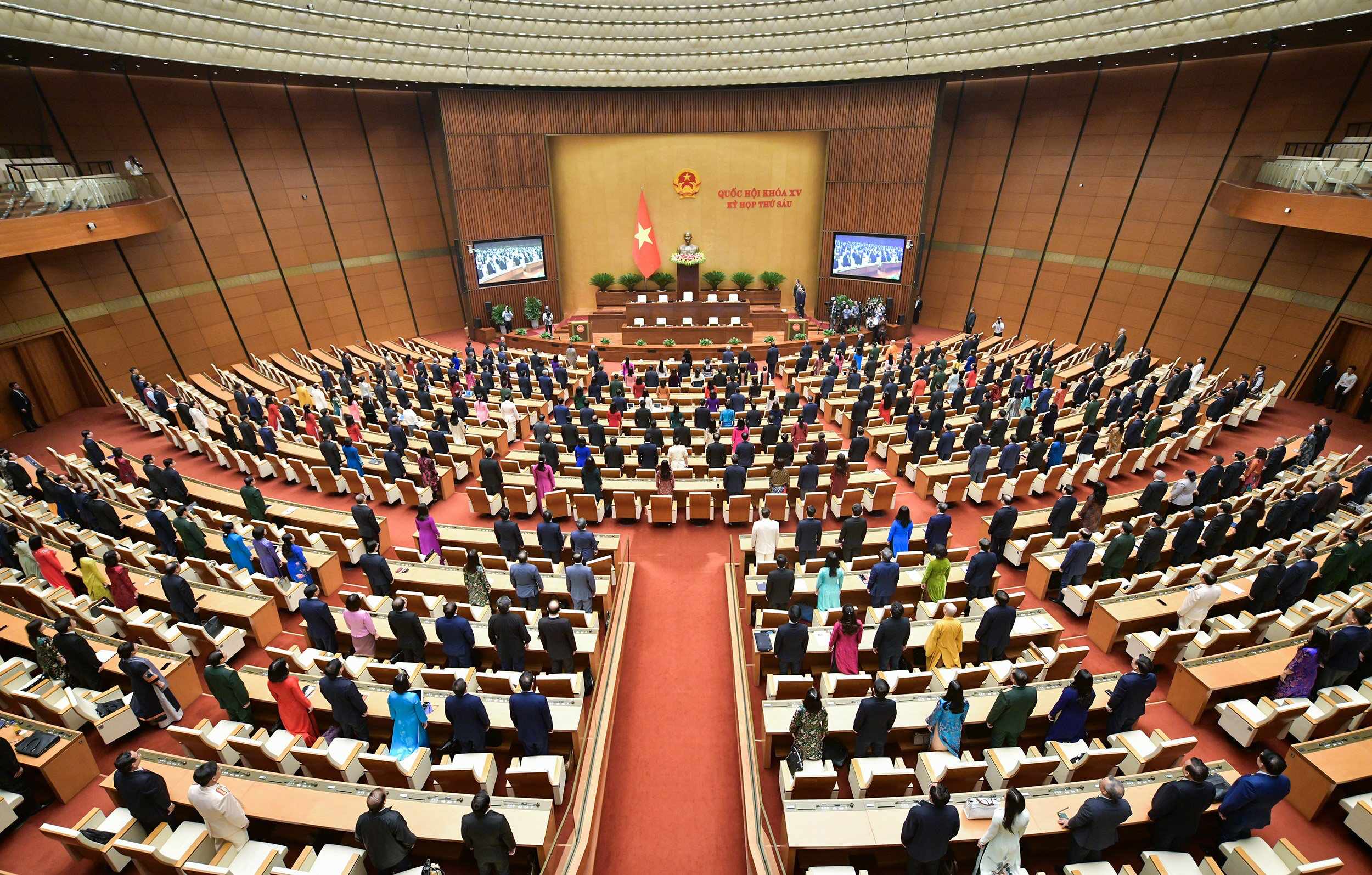
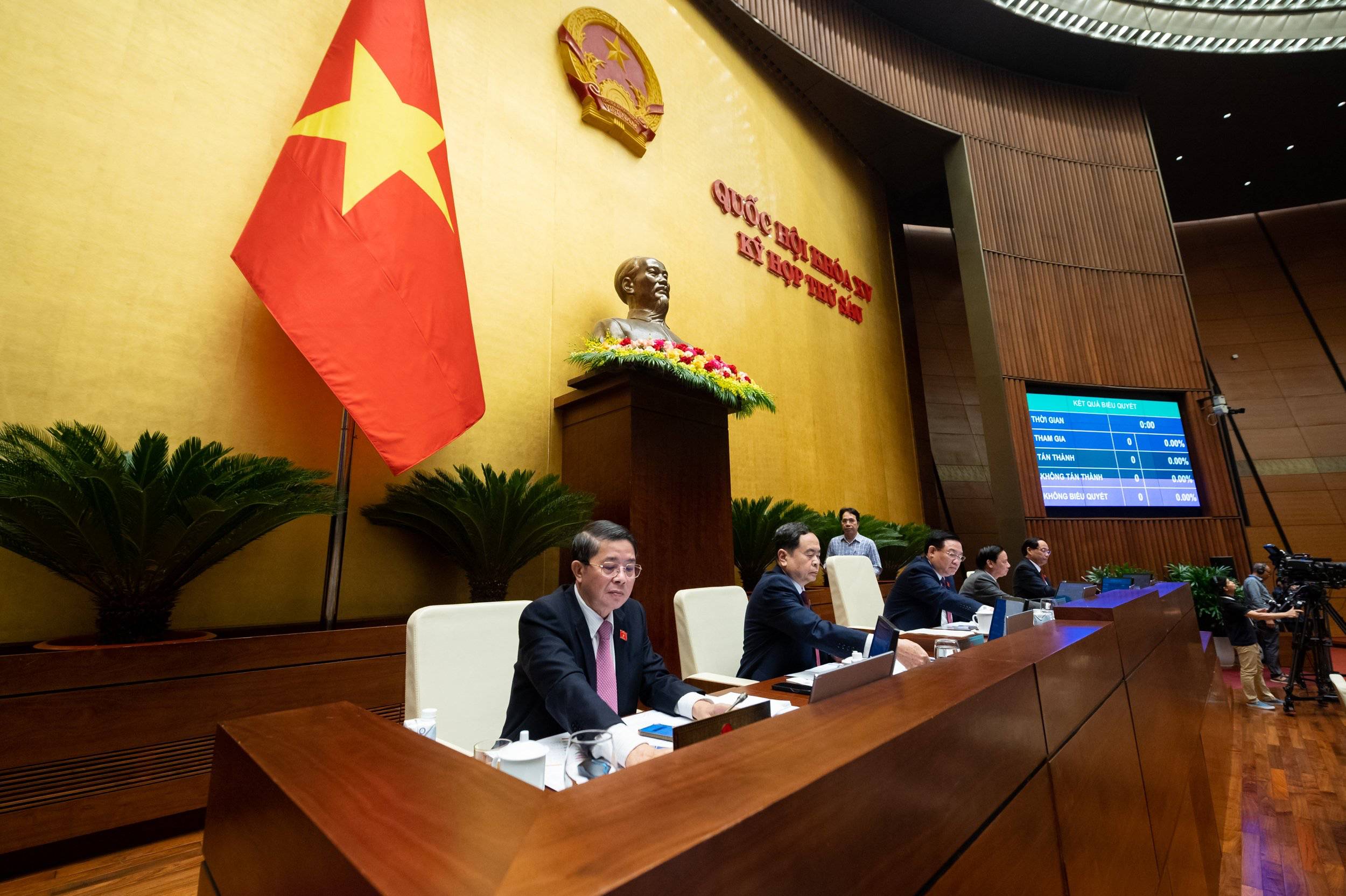
On the morning of November 29, 2023, at the 6th Session of the 15th National Assembly, after hearing Chairman of the Finance and Budget Committee Le Quang Manh present the Report on explanation, absorption, and revision of the draft Resolution on the application of additional corporate income tax under the Global Anti-Base Erosion (GloBE) rules, the National Assembly conducted an electronic vote to adopt the Resolution.
Electronic voting results indicated that 462 delegates voted in favor (accounting for 93.52%). Accordingly, with an overwhelming majority, the National Assembly officially ratified the Resolution on applying additional corporate income tax under GloBE rules.
On July 9, 2021, Finance Ministers and Central Bank Governors of the G20 endorsed the core framework of the Two-Pillar Solution to address tax challenges arising from economic digitalization, comprising: Pillar One on tax nexus and profit allocation for digital business models; and Pillar Two establishing a 15% global minimum corporate tax rate on multinational enterprises (MNEs).
On December 16, 2022, the OECD/G20 Inclusive Framework on BEPS announced that 138 jurisdictions agreed to the Two-Pillar Solution.
Vietnam is the 100th member of BEPS and endorsed the agreement without reservations.
Rules regarding the application of the Global Minimum Tax (GloBE rules) proposed by the OECD take effect from the 2024 corporate income tax fiscal year. Many jurisdictions have enacted domestic legislation to enforce these rules starting in 2024.
Under OECD guidance, the Global Minimum Tax constitutes a qualified domestic minimum top-up tax (QDMTT), requiring jurisdictions to adjust domestic legal frameworks accordingly.
Adopting GloBE regulations provides Vietnam with strategic opportunities: bolstering state budget revenues through top-up tax collections; deepening international economic integration; and curbing tax evasion, base erosion, transfer pricing, and profit shifting.
Under the newly adopted Resolution, Vietnam enforces the Global Minimum Tax effective January 1, 2024. The 15% rate applies to MNEs with consolidated group revenues of EUR 750 million (approx. USD 800 million) or more in at least two of the four preceding years. Qualifying inbound MNE affiliates must pay the top-up tax directly in Vietnam.
Preliminary tax authority reviews estimate state budget revenues will increase by over VND 14,600 billion as approximately 122 foreign-invested corporations in Vietnam fall within the scope of the tax.

See coverage of the 6th Session of the 15th National Assembly on Industry and Trade Magazine here.
The National Assembly's Finance and Budget Committee noted that implementing the Global Minimum Tax presents complex technical and administrative challenges for tax authorities. Managing multiple tax mechanisms requires translating OECD GloBE rules into operational tax procedures, designing administrative templates, upgrading IT infrastructure, conducting macroeconomic revenue assessments, and dynamically monitoring covered MNE entities each fiscal year.
This mandates close collaboration with international tax bodies and peer tax administrations, establishing automated information exchange networks, and refining domestic organizational structures. The Committee urged the Government to promptly formulate execution roadmaps, allocate technical and human resources, and build administrative capacity for both tax agencies and corporate taxpayers.
Furthermore, the Government must thoroughly evaluate impacts on Vietnam's foreign investment environment. When amending the Law on Corporate Income Tax, alongside codifying GloBE provisions, the Government must comprehensively reform tax incentive schemes. Policy measures should shift from conventional profit-based tax exemptions/reductions to internationally compliant cost-based investment incentives (such as R&D credits, infrastructure grants, and high-tech capital expenditure offsets) to maintain long-term FDI attractiveness.
Source: Tapchicongthuong