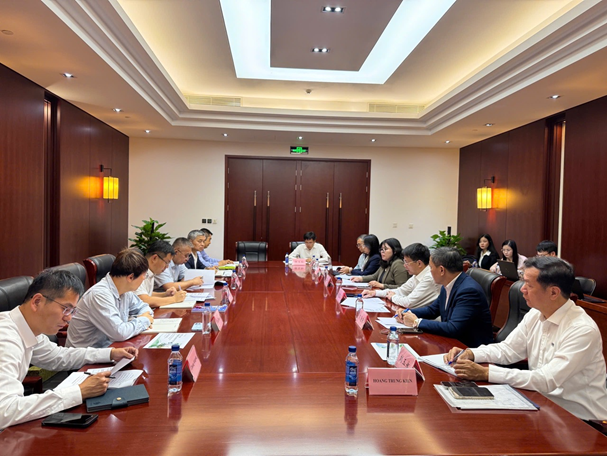
The Ministry of Industry and Trade has requested Vietnam Electricity (EVN) to study, formulate an implementation roadmap, and propose target electricity customer segments for the application of a two-part electricity tariff.

The Ministry of Industry and Trade recently issued an official dispatch requesting Vietnam Electricity (EVN) to conduct comprehensive research into establishing a two-part electricity tariff mechanism - comprising capacity charges (kW) and energy consumption charges (kWh) - for applicable consumer categories.
In parallel, EVN is tasked with developing an application roadmap and proposing specific customer categories eligible for the two-part tariff structure. Based on recommended mechanisms and target groups, EVN must carry out comparative benchmarking and financial modeling against current retail tariff schedules established under MOIT Decision No. 249/QD-BCT (dated November 8, 2023).

5-Tier Electricity Tariff: Households Consuming 710 kWh or Less Will Pay Lower Fees
Designing progressive retail electricity tariff tiers for residential customers according to differentiated usage levels aims to encourage efficient, economical power usage.
The Ministry of Industry and Trade also instructed EVN to carry out public communications and gather broad stakeholder feedback regarding proposed mechanisms and implementation roadmaps. Furthermore, EVN must thoroughly assess impacts on average retail electricity prices as well as cost implications across diverse consumer groups.
The comprehensive evaluation report and proposed two-part tariff framework following rigorous simulation studies will be submitted to the Ministry of Industry and Trade for review and subsequent presentation to the Prime Minister for final approval.
At a recent government press conference, a representative of the Ministry noted that international practices demonstrate two-part tariff mechanisms - which separately bill capacity (in kW) and active electrical energy (in kWh) - are predominantly utilized for commercial and industrial manufacturing consumers rather than residential households.
Given that this represents a novel pricing methodology for Vietnam, careful study and targeted piloting are required to mitigate severe cost disruptions to end users. Accordingly, grounded in empirical customer consumption profiles and international benchmarks, the Ministry of Industry and Trade will structure a pilot two-part tariff program for selected industrial manufacturing consumers to accurately evaluate impacts on average retail power prices and industrial operational expenses./.
Source: Tintuc24h