
Scientists from Iceland have developed a pioneering technology that accelerates the process of turning CO2 into stone within 2 years, instead of waiting for thousands of years.
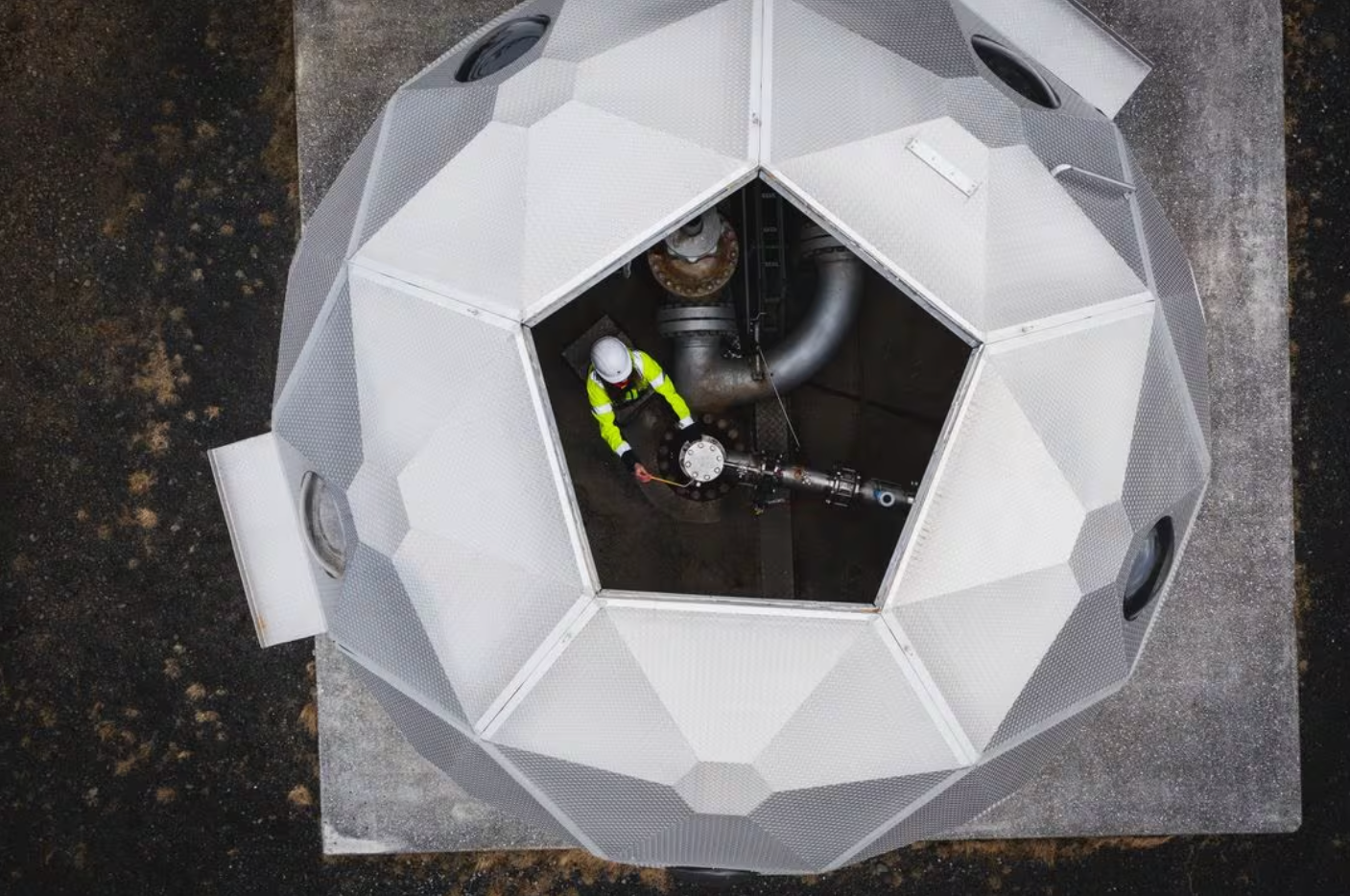
Engineers at Carbfix mixing CO2 with water and injecting it into basalt formations underground - Photo: REUTERS
New Technology Solves an Old Problem
Icelandic startup Carbfix is drawing worldwide attention by introducing an innovative technology that transforms CO2 emissions into solid stone for construction purposes. Ólafur Teitur Guðnason, Communications Director of Carbfix, held a technical showcase of this specialized solution at the Hellisheidi geothermal power plant located in southwestern Iceland on October 30.
Engineers mixed CO2 captured at the power plant with water, then pumped the liquid mixture deep into subterranean basalt rock formations. Water acts as a carrier fluid while simultaneously eliminating the natural buoyancy of CO2 gas and accelerating the mineralization reaction with basalt—the essential component required to form permanent rock minerals.
As a result, over the 9 years since Carbfix began injecting the mixture subterraneanly, 95% of the injected CO2 has permanently converted into solid stone. Remarkably, it takes less than 2 years to achieve full mineralization.
“Our technology dramatically accelerates natural processes that normally occur over geological epochs. Instead of taking thousands of years, we accomplish this in less than two years,” said Mr. Guðnason.
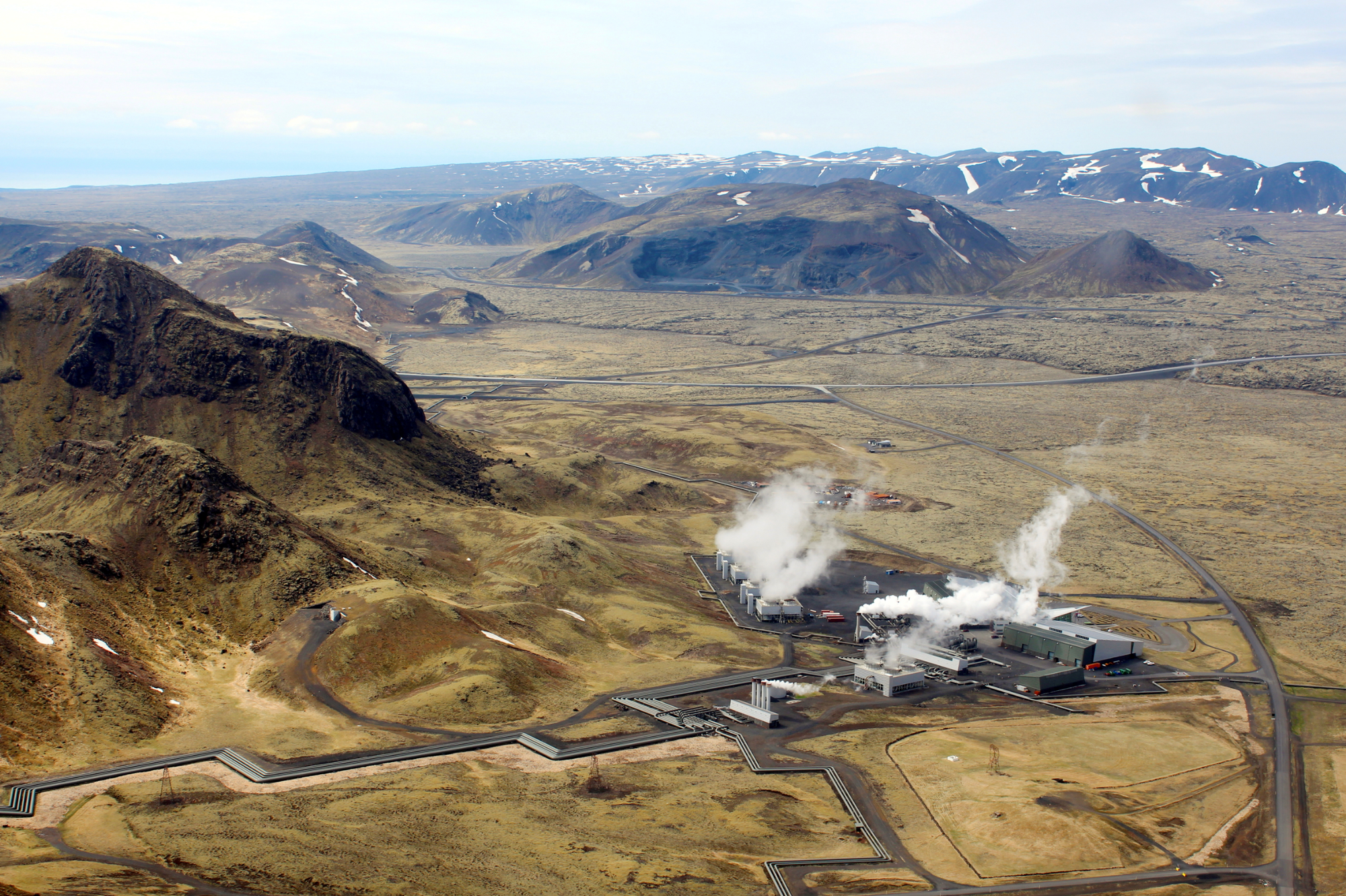
Aerial view of the Hellisheidi geothermal power plant - Photo: REUTERS
The Director noted that the operation runs autonomously without requiring constant supervision, and effectively addresses the controversial issue of conventional carbon storage practiced by the oil and gas sector. This is also why Carbfix pioneered this engineering breakthrough.
Previously, several oil and gas conglomerates built geological "graveyards" to store CO2 underground as gas or supercritical liquid, which climate scientists viewed with skepticism due to leakage risks.
According to Reuters, Iceland's new technology has attracted tremendous international interest. Canadian Prime Minister Justin Trudeau, Paris Mayor Anne Hidalgo, and a US Senate delegation visited the Hellisheidi facility over the summer.
Furthermore, more than 120 scientists, policymakers, and international corporate executives attended the global mineralization summit organized by Carbfix in September 2023.
Environmental Competition
In the United States, several companies currently deploy carbon capture and storage (CCS) technology, injecting CO2 into depleted onshore oil and gas reservoirs to extract residual hydrocarbons via enhanced oil recovery.
Swiss startup Climeworks is one of Carbfix's longest-standing CO2 supply partners. In 2021, they launched the world's first commercial direct air capture (DAC) plant, capable of filtering 4,000 metric tons of CO2 annually from ambient air.
Carbfix recently signed an agreement to provide CO2 storage in Iceland for its direct competitor, Norway-based Removr. Both companies are part of the Ankeron consortium, which was awarded $3 million by the US Department of Energy to study the feasibility of DAC in Washington State.
Dr. Edda Sif Aradottir, CEO of Carbfix, shared in an interview: “Looking at the scale of climate action we must achieve through carbon removal, we cannot allow ourselves to monopolize this technology.”
She also emphasized that while “DAC is a critical component of Carbfix's business model”, advancing point-source CCS to prevent CO2 from entering the atmosphere in the first place remains the paramount priority.
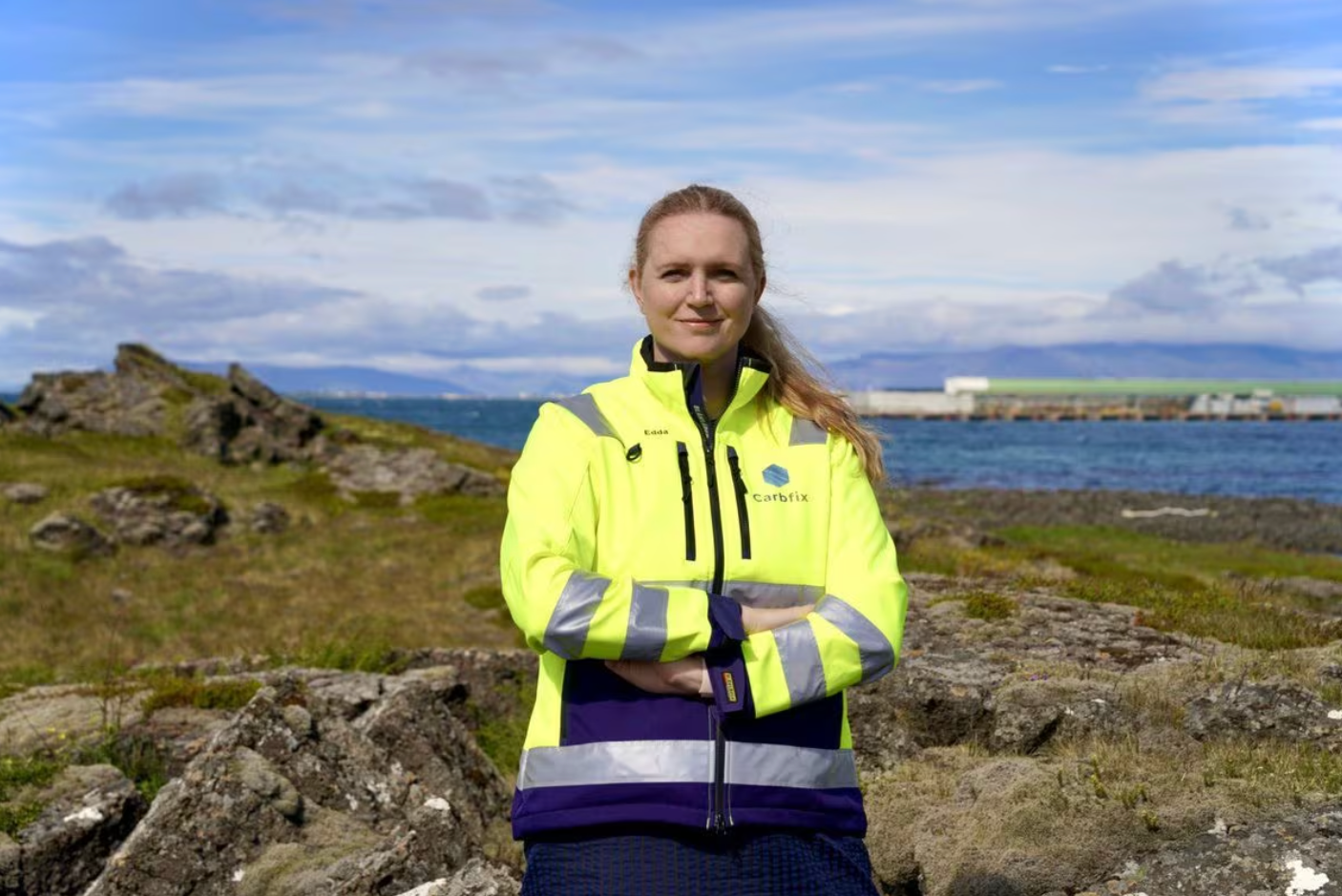
Dr. Edda Sif Aradottir, CEO of Carbfix - Photo: REUTERS
Nonetheless, data from respected research intelligence firm BloombergNEF reveals that such technology addressed only 0.1% of global emissions in 2022, despite governments and corporations investing $83 billion into it over the past three decades.
Carbfix is also co-developing the Coda Terminal—a cross-border CO2 transport and storage hub. Once operational, the terminal will significantly broaden the commercial applicability of mineralization technology and facilitate deployment into other regions including Africa and Asia.
The Icelandic firm also revealed cooperation intentions with the United Kingdom, which currently targets capturing and sequestering 20 to 30 million tons of CO2 annually by 2030.
Source: tuoitre.vn